Filing was thinking
The Home’s folder tree was built by a records assistant who left in 2022, and it is the only document at the Home that explains the Home. Residents by wing, then by species, then by legal status, with a folder called “disputed” that is larger than the rest. Donors by programme. Field reports by chapter, by year, by whether anyone in Ankh-Morpork was meant to read them. The consultant asked the business analyst who maintained it now. The business analyst said the reader did not need it.
A taxonomy is recorded judgement. Deciding where a document goes is deciding what it is, and years of that deciding left a structure that encoded how the Home understood its own work. Semantic retrieval makes the folder tree optional, then vestigial, then wrong, because naming discipline and filing discipline decay as soon as retrieval stops depending on them. The pilot was six months old and the “disputed” folder had not gained a file since month two. The disputes had not stopped. Nobody was deciding any more where a dispute went. The estate reshapes itself around the reader. The exit cost, when it comes, is that the estate has become a heap navigable only through the tool that made it one, and the option of operating without the tool expired somewhere along the way without a write-off.
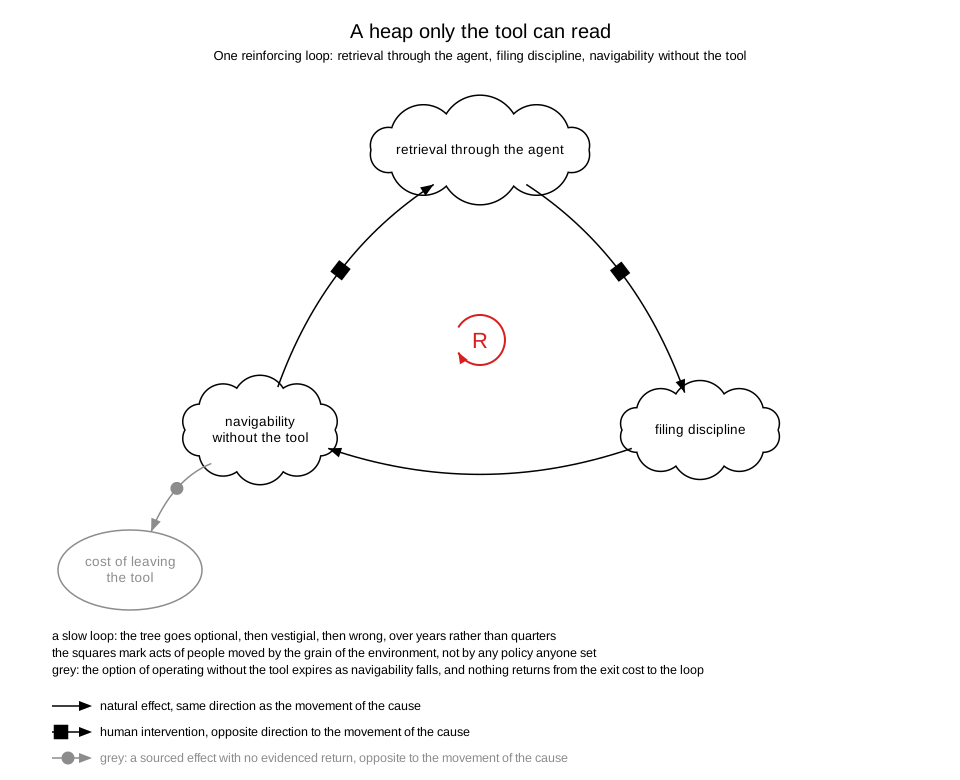
The loop has been turning slowly, in one direction. Retrieval through the agent makes filing unnecessary, so filing lapses; the tree that filing maintained stops describing the estate; and an estate no tree describes is reached through the agent or not at all, which sends more retrieval through the agent. Both squares mark acts of people, and neither is a policy: nobody decides to stop filing, the grain of the environment stops it. The grey branch is the exit cost, rising as navigability without the tool falls, with nothing evidenced returning from it to the loop.
Reversibility degrades further than the heap suggests. The Home learned in the autumn what replacing a document system costs: it means migrating files, and the files went to Germany in a fortnight of evenings. Replacing a reader-shaped estate means migrating embeddings, retrieval assumptions, classifications, a sediment of generated knowledge, user habits, workflows, and the undocumented prompts and policies that turned out to be doing governance. Somewhere in the adoption, a tool stopped being a tool and became part of how the Home knows, and there is no migration format for that. The architect, who had just written the account of the last migration one page per layer, asked what the page for this layer would say. The consultant said it would be short, and that this was not good news.