The Library
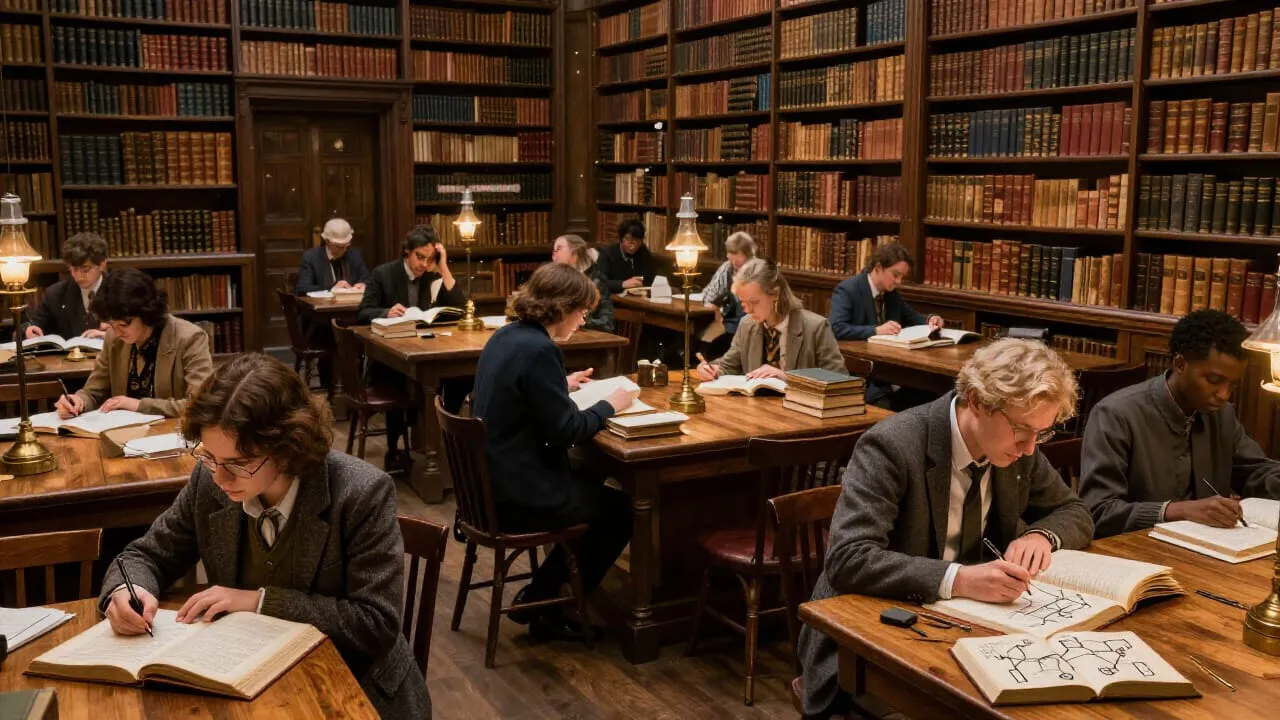
The Library is the largest single asset the university holds and the only one it has never successfully inventoried.
What it is
The Library is the strongest point of L-space on the Disc, which in practice means the stacks do not end and the university has never established where they go. The shelves are longer on the inside. Attempts to measure this have been discouraged, and the navigation, not the holdings, is the difficult part.
The Librarian is an orangutan. His authority over the stacks is not delegated from the Archchancellor and does not lapse when Archchancellors do. He keeps the hours he keeps, and has never been asked to justify a decision about the collection to anyone who got an answer.
How it is used
Nobody teaches in it. This is the point, and is easily mistaken for neglect. The reading is self-directed, the material is the curriculum, and what a reader comes away with is partly the book they went in for and mostly everything they passed on the way. The university has never written this down as a method, because writing it down would make it a syllabus and a syllabus is the thing it is not.
The argument underneath that, made at proper length and without the orangutan, is in Notes in the margin.
The shelf
A selection of places worth returning to, maintained outside these walls because a shelf that only points inwards is not a shelf. Four sections: organisations doing sustained work on digital rights and policy, practical guides that are actually kept up to date, journalists and researchers who track the same ground year after year, and the technical standards and measured evidence against which a claim can be checked. It lives on green.
Access
Open to members of the university. Also, in practice, open to anyone who gets in, which the Librarian permits and the Bursar has stopped costing.